-
-
-
NH 31, Bhaganbigha,PO-Sohsarai, Bihar Sharif,Dist-Nalanda, (Bihar)
Rohit Kumar
May 02, 2026
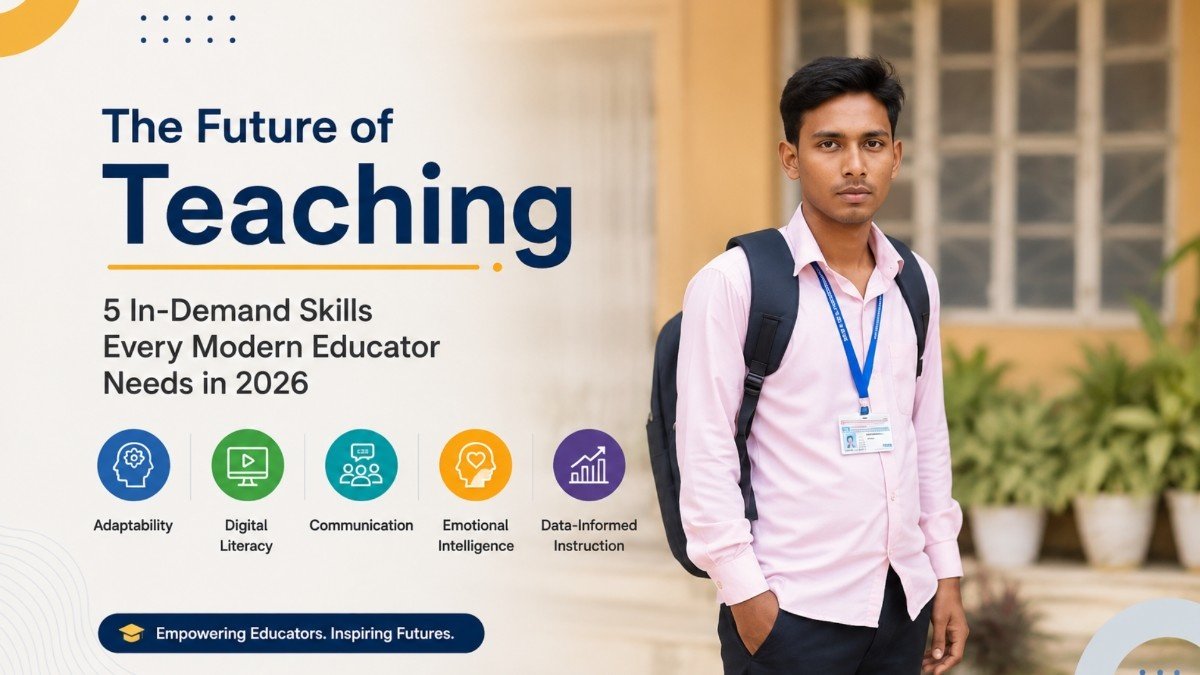
The Future of Teaching: 5 In-Demand Skills Every Modern Educator Needs in 2026
Discover the top 5 in-demand skills every modern educator needs in 2026. From EdTech integration to SEL, learn how to future-proof your teaching career.
"Technology will not replace great teachers, but technology in the hands of great teachers is transformational." – George Couros
Introduction
Education is no longer just about transferring knowledge from a textbook to a student’s notebook. As we navigate 2026, the role of an educator has evolved dramatically. Driven by the full-scale implementation of the National Education Policy (NEP) 2020, the rise of educational technology, and a growing emphasis on holistic student development, today’s classrooms demand a new kind of teacher.
Whether you are an aspiring educator, a current teacher looking to upskill, or a parent curious about the changing educational landscape, understanding these shifts is crucial. Here are the top 5 in-demand skills that define the modern, future-ready educator.
1. Digital Fluency and EdTech Integration
Technology is no longer an optional add-on; it is the foundation of modern learning. However, digital fluency is not just about knowing how to use a smartboard or a learning management system. It is about leveraging tools like AI-driven personalized learning platforms, interactive simulations, and data analytics to augment teaching. The modern educator uses technology to identify learning gaps, automate administrative tasks, and create immersive, engaging lessons that resonate with digitally native students.
2. Facilitation of Social-Emotional Learning (SEL)
Academic success is deeply intertwined with mental and emotional well-being. Post-pandemic educational frameworks have placed a massive premium on Social-Emotional Learning (SEL). Teachers are now expected to be empathetic facilitators who can help students manage stress, resolve conflicts, build resilience, and develop interpersonal skills. Creating a psychologically safe classroom environment is now considered just as important as delivering the curriculum.
3. Competency-Based and Experiential Learning
The days of rote memorization are fading. The current educational paradigm focuses on competency-based education—ensuring students master specific skills and can apply them in real-world scenarios. Modern educators design project-based learning (PBL) activities, encourage critical thinking, and connect classroom concepts to community or global issues. This shift requires teachers to act as guides and mentors rather than sole authorities of information.
4. Inclusive and Differentiated Instruction
Every classroom is a diverse microcosm of varying learning speeds, cultural backgrounds, and neurodivergent profiles. In-demand educators are trained in differentiated instruction—the ability to tailor teaching methods, materials, and assessments to meet the unique needs of every student. Whether it’s providing visual aids for visual learners, offering extended time for those who need it, or integrating multilingual resources, inclusivity is the hallmark of a 21st-century teacher.
5. Adaptability and a Growth Mindset
The only constant in education is change. New policies, emerging technologies, and evolving societal needs require teachers to be lifelong learners. Educators with a growth mindset actively seek professional development, reflect on their teaching practices, and remain open to feedback. This adaptability not only keeps their teaching methods fresh but also models the exact behavior they wish to instill in their students.
Conclusion
The classroom of tomorrow is dynamic, inclusive, and technology-enabled. For aspiring educators, mastering these five skills is not just about staying relevant; it is about making a meaningful, lasting impact on the next generation. The journey to becoming such an educator begins with choosing the right foundational training—one that balances theoretical knowledge with real-world, practical classroom experience.
About the Institution
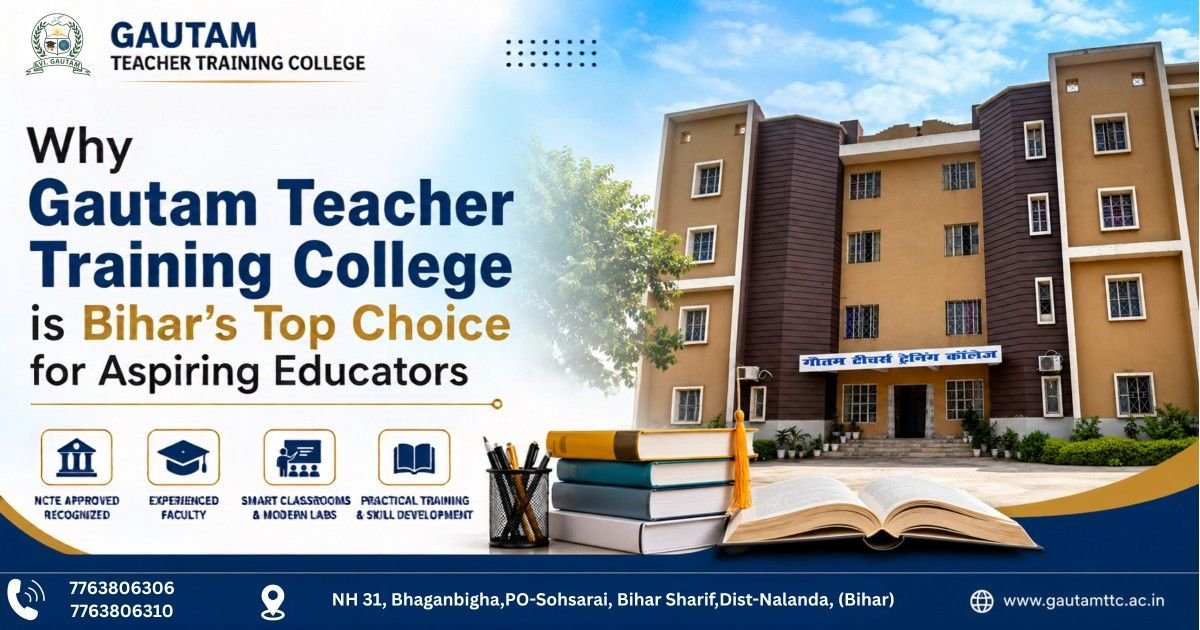
At Gautam Teacher Training College (Nalanda, Bihar), we believe that preparing future educators means equipping them with these exact 21st-century skills. As an NCTE-approved institution established with a legacy of academic excellence, our B.Ed, M.Ed, and D.El.Ed programs are meticulously designed to blend traditional educational values with modern teaching methodologies. With experienced faculty, modern campus infrastructure, and a strong focus on practical exposure and career-oriented guidance, we empower our students to become confident, compassionate, and future-ready educators. If you are ready to shape the future of education, explore our admission
.png)